
After a heavy Massachusetts winter storm, finding a stray shingle in your driveway often sparks a wave of anxiety about what’s happening out of sight on your roof. It’s difficult to know who to trust when one person suggests a quick patch and another insists on a full replacement, all while you’re worrying about potential leaks and mold growth. This guide provides the expert knowledge you need for effective roof shingle repair MA, ensuring you can protect your property’s value and structural integrity with confidence.
You deserve a home that remains a sanctuary against the elements, not a source of constant stress. We’ll explore how to assess storm damage accurately, navigate the requirements of the 9th Edition of the Massachusetts State Building Code (780 CMR), and distinguish between temporary fixes and long-term solutions. By understanding the difference between surface repairs and the mandatory ice and water shields required by law, you can ensure your home is prepared for the next freeze-thaw cycle. You’ll gain the perspective of a seasoned local expert, allowing you to choose a partner who prioritizes craftsmanship and durability over high-pressure sales tactics.
Key Takeaways
- Recognize how Massachusetts weather patterns, like Nor’easters and heavy snow, specifically impact your shingles so you can spot damage before it leads to leaks.
- Master the “20-Year Rule” to accurately assess whether a targeted repair or a full replacement is the most cost-effective path for your home’s integrity.
- Follow professional safety standards and the “Warm Day” rule to execute a roof shingle repair MA that withstands the next harsh winter.
- Address the root causes of ice dams through proper attic maintenance to stop moisture from compromising your new shingle work.
- Protect your property by learning to distinguish between licensed local specialists and out-of-state “storm chasers” who may ignore state building codes.
Identifying Common Shingle Damage After Massachusetts Storms
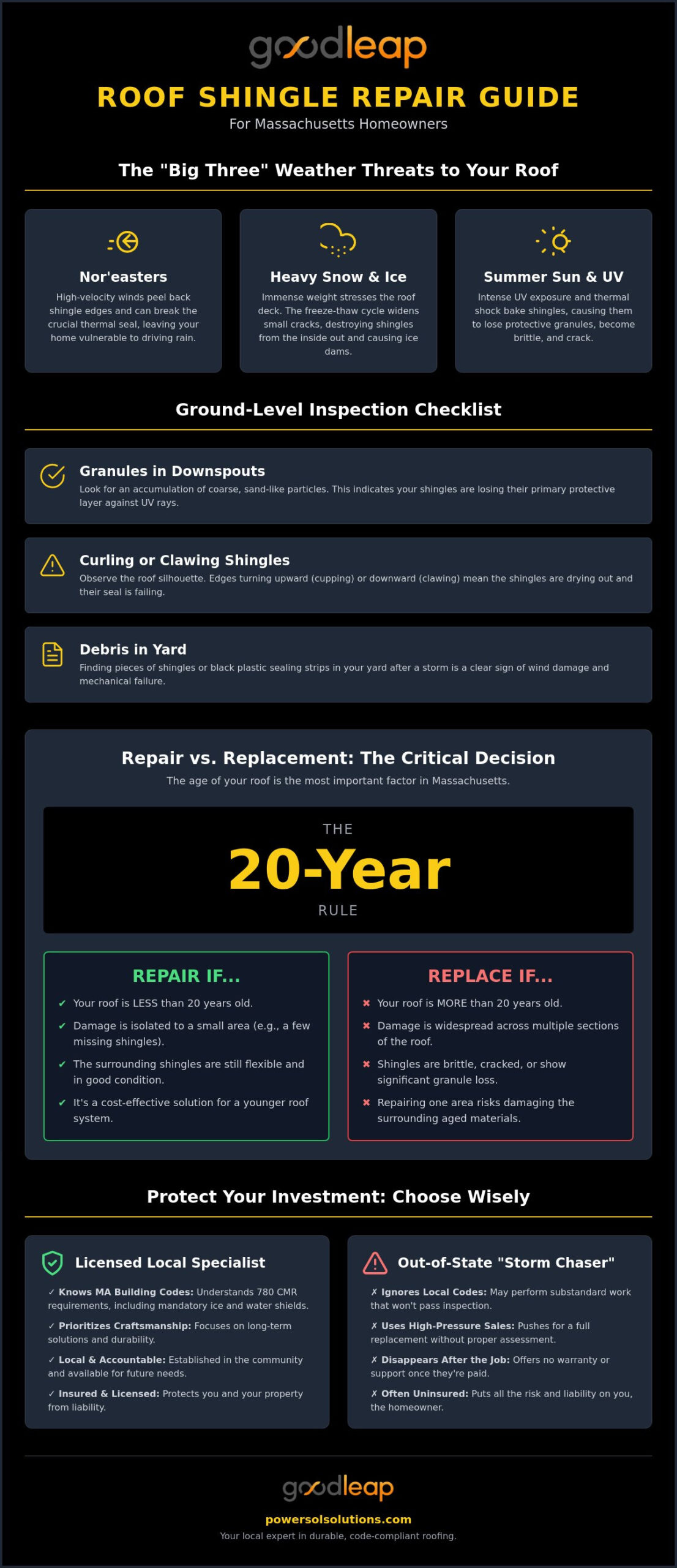
The New England climate is a relentless force that tests the structural integrity of your home every season. Homeowners in the Commonwealth face a unique set of meteorological challenges that demand a proactive approach to roof shingle repair MA. We categorize these primary threats as the “Big Three”: Nor’easters, heavy snow loads, and intense summer humidity. Each of these forces attacks asphalt shingles in distinct ways, often leaving behind damage that remains invisible to the untrained eye until a leak develops.
High-velocity winds from Nor’easters can peel back shingle edges, while heavy snow creates immense pressure that stresses the underlying roof deck. On the South Shore, hailstorms often leave behind “bruised” shingles. These appear as small, dark indentations where the protective granules have been knocked away. If you don’t address these spots, the sun’s UV rays will quickly degrade the exposed bitumen, leading to brittle surfaces and eventual water infiltration.
Granule loss is a particularly dangerous form of degradation. These ceramic-coated minerals are the first line of defense against the sun. When shingles become “bald,” they lose their ability to reflect heat, causing them to bake and crack. Similarly, wind-lift is a deceptive problem. Your shingles might look perfectly flat from the ground, but a strong gust may have broken the thermal seal. Once this bond is compromised, the shingle no longer provides a waterproof barrier, leaving your home vulnerable to the next driving rain.
Seasonal Damage Patterns in New England
The timing of your inspection matters as much as the method. Our seasons dictate specific failure points for roofing materials:
- Spring and Summer: High humidity and intense UV exposure cause thermal shock. Shingles expand and contract rapidly, which can lead to premature aging and loss of flexibility.
- Autumn Wind Damage: Coastal towns like Quincy often face hurricane-force gusts during the fall. These winds test the integrity of every fastener and can lift shingles that were weakened during the summer.
- Winter’s Toll: Fluctuating temperatures are a primary enemy. Water enters small existing cracks, freezes, and expands. This cycle widens the gaps and destroys the shingle from the inside out.
The ‘Ground-Level’ Inspection Checklist
You don’t always need a ladder to identify the need for roof shingle repair MA. A thorough walk-around can reveal several red flags:
- Check your downspouts: If you see a high accumulation of granules that look like coarse sand, your shingles are reaching the end of their functional life.
- Observe the roof silhouette: Look for “clawing,” where the shingle edges turn downward, or “cupping,” where the edges curl upward. Both indicate that the material is drying out and losing its protective seal.
- Monitor for debris: Finding pieces of shingle or plastic sealing strips in your yard after a storm is a clear sign of mechanical failure.
Thermal splitting is a vertical tear in a shingle caused by the rapid expansion and contraction of the roof deck during extreme Massachusetts temperature shifts.
The Homeowner’s Assessment: Evaluating Repair vs. Replacement
Deciding between a targeted patch and a complete reroof is one of the most significant financial choices you’ll make for your property. It requires a balance between immediate budget concerns and the long-term safety of your household. While a roof shingle repair MA can resolve isolated issues, systemic failure requires a more comprehensive approach to maintain your home’s value and structural integrity.
The “20-Year Rule” serves as a primary benchmark in New England. Although many asphalt shingles are rated for longer, the intense freeze-thaw cycles in Massachusetts often accelerate material fatigue. If your roof system has surpassed the two-decade mark, the underlying bitumen has likely become brittle. In these cases, attempting to replace individual shingles can actually cause more damage to the surrounding aged materials. This makes a full replacement the wiser investment for your peace of mind, as it ensures the entire structure is unified against the elements.
Building codes also play a decisive role in your assessment. Under the 9th Edition of the Massachusetts State Building Code (780 CMR), a residential roof is limited to a maximum of two layers of shingles. If your home already has two layers, the law prohibits a third. This means a complete tear-off is mandatory, ensuring the new system is fastened directly to a sound roof deck. When you’re evaluating durable roofing solutions, checking the number of existing layers is an essential first step before any work begins.
When a Simple Repair is Sufficient
Minor issues don’t always demand a major overhaul. If your roof is less than 15 years old and the damage is localized, a repair is often the most logical path. You should consider a targeted fix for isolated wind damage where only a few shingles have been dislodged by a recent gust. Minor leaks originating from damaged flashing around chimneys or plumbing vents are also prime candidates for repair. Replacing a single shingle that was physically punctured or bruised by a fallen branch can prevent localized water infiltration without the need for a full project. Taking care of these small problems quickly prevents water from reaching the decking. If you’re unsure about the extent of the damage, reaching out to the team at powersolsolutions.com can provide the clarity you need to move forward.
Signs You Need a Full Roof Replacement
Systemic failure is usually obvious once you know what to look for. If you notice widespread “alligatoring,” which is a pattern of deep cracks across the entire surface, the shingles have lost their waterproof capabilities. Consistent leaks that reappear even after multiple repair attempts suggest that the underlayment or the shingles themselves have reached the end of their functional life. For a deeper look at the long-term ROI of a new system, consult our guide on expert roof replacement in Massachusetts. Choosing a full replacement ensures your home is protected by modern ice and water shields, providing a level of security that a simple patch cannot match. If you want to understand the full scope of material grades and installation standards involved, our comprehensive resource on asphalt shingle replacement quality and protection can help you evaluate your options with confidence.
How to Repair Damaged Roof Shingles: A Step-by-Step Guide
Executing a successful roof shingle repair MA requires more than just a hammer and a spare bundle of materials. It demands a methodical approach that respects the physics of your roof system and the specific demands of the New England climate. Before you begin, you must prioritize safety. Many homes in areas like Brockton feature steep pitches and multi-story elevations that require specialized fall-protection gear, including harnesses and roof anchors. If you aren’t comfortable with heights or don’t possess the proper equipment, it’s always wiser to consult a professional who can ensure the work is done without risk to life or limb.
Timing is also critical. We follow the “Warm Day” rule: shingles are best handled when temperatures are above 50 degrees Fahrenheit. When asphalt is cold, it becomes brittle and prone to cracking during the repair process. Conversely, a warm shingle is pliable and easier to manipulate without causing collateral damage to the surrounding tabs. You should also ensure you’re using professional-grade roofing cement rather than standard hardware store sealants. These high-performance adhesives are specifically formulated to withstand the thermal expansion and contraction cycles common in Massachusetts. Finally, always try to match your shingle batches. Even subtle color variations can disrupt your home’s curb appeal, making a localized repair look like an eyesore.
Step 1-3: Removing the Damaged Section
The first stage of repair is about surgical precision. You must remove the failed material without compromising the integrity of the shingles that remain.
- Break the seal: Slide a flat bar under the shingle directly above the damaged one. Gently wiggle the tool to break the factory sealant strip without tearing the asphalt mat.
- Locate hidden nails: You’ll find that the nails holding the damaged shingle are actually located underneath the shingle row above it. Carefully lift those tabs to expose and remove the four to six fasteners securing the damaged piece.
- Prep the surface: Once the old shingle is out, clear away any leftover debris, loose granules, or hardened cement from the underlayment surface to ensure the new shingle sits perfectly flush.
Step 4-6: Installing the New Shingle and Resealing
Installation is where you ensure the long-term durability of the fix. Precision here prevents future blow-offs during autumn windstorms.
- Proper nail placement: Drive your new nails into the designated nail line provided by the manufacturer. Avoid the common “high-nailing” mistake, where nails are placed too high on the shingle, as this fails to catch the top edge of the shingle below and leads to wind damage.
- Apply the adhesive: Place a small amount of roofing adhesive under the corners of the new shingle and the tabs you lifted earlier. This creates a New England-grade seal that mirrors the factory bond.
To properly seat the new shingle, align its bottom edge and side cutouts with the existing pattern and press down firmly to engage the adhesive bond.
Critical Maintenance: Preventing Ice Dams and Water Infiltration
A successful roof shingle repair MA addresses the surface, but long-term protection requires looking beneath the shingles. In Massachusetts, the most common cause of winter roof failure is the ice dam cycle. This occurs when heat escapes from your attic, melts the snow on your roof, and allows the water to refreeze at the colder eaves. This ridge of ice forces water back up under your shingles, where it can rot the wood decking and seep into your walls. Without proper attic insulation, even the most expensive shingles will eventually fail under the stress of a typical New England winter.
Understanding the signs of leaking roof within your attic is the first step in diagnosing these systemic issues. Look for water staining on rafters or damp insulation, as these often indicate that ice dams have already compromised your perimeter. To combat this, the 9th Edition of the Massachusetts State Building Code (780 CMR) mandates the installation of an ice and water shield. This self-adhering underlayment creates a watertight seal at the eaves and valleys, ensuring that even when ice builds up, moisture cannot penetrate your home’s interior. This layer is your final defense when the weather turns extreme.
Clear your gutters regularly to prevent debris from trapping water against your roof’s edge. Clogged gutters encourage standing water, which accelerates shingle rot and provides a foundation for larger ice dams to form during the freeze-thaw cycle. If you suspect your home’s defenses are thinning or your shingles are showing signs of wear, contact the local specialists at powersolsolutions.com for a comprehensive assessment of your roof’s integrity. Taking action before the next storm hits is the most effective way to preserve your property’s value.
The Connection Between Roofs, Siding, and Windows
Your home’s exterior functions as a unified protective envelope where every component relies on the others. Failing windows often allow moisture to enter wall cavities, creating dampness that homeowners frequently mistake for a roof leak. By integrating high-quality roofing with durable siding, you create a seamless barrier against New England’s driving rain and salt air. Upgrading to energy-efficient windows and improved attic ventilation also reduces the “heat escape” that fuels the ice dam cycle, protecting your new shingles from the inside out and lowering your utility costs.
Proactive Maintenance Schedule for MA Homeowners
Consistency is the key to extending the life of your asphalt shingles and avoiding costly emergency repairs. Follow this seasonal checklist to stay ahead of potential damage:
- The November Inspection: Before the first snow falls, check your roof for loose shingles and ensure all flashing is secure around chimneys and vents to prevent water entry.
- Post-Winter Cleanup: In the spring, remove the accumulation of salt, grit, and organic debris that can trap moisture and degrade the shingle surface over time.
Schedule a professional inspection every 3 to 5 years to identify structural vulnerabilities that are invisible from the ground level.
Partnering with Local Experts for Durable Roof Shingle Repair in MA
Choosing a professional for roof shingle repair MA involves more than just finding someone with a ladder. It requires a partner who understands the specific legal and structural demands of the Commonwealth. Every municipality, from the historic streets of Boston to the coastal reaches of Quincy and the residential neighborhoods of Brockton, operates under the 9th Edition of the Massachusetts State Building Code (780 CMR). A local expert ensures that every repair meets these rigorous standards, particularly regarding wind resistance and ice dam protection. This specialized knowledge prevents future inspection failures and ensures your manufacturer warranty remains valid through proper, code-compliant installation.
Homeowners must remain vigilant against “storm chasers”—out-of-state contractors who appear after a major Nor’easter or hailstorm. These entities often lack the mandatory Home Improvement Contractor (HIC) registration and may disappear before you ever need to exercise a workmanship warranty. By contrast, working with trusted roofing contractors in Boston, MA who are fully licensed and familiar with local code requirements provides a sense of security and long-term reliability. We view every project as the beginning of a partnership, focusing on the pride of homeownership and the wisdom of making durable investments that protect your family for decades.
The Powersol advantage lies in our meticulous attention to detail and our forward-thinking approach to home maintenance. We ensure that every roof shingle repair MA is “solar-ready,” meaning we assess the structural integrity of your roof to support future energy upgrades. This prevents the frustration of needing a full replacement just a few years after a major repair. Our goal is to take the burden of coordination off your shoulders, acting as a visionary partner who looks toward the future of your home’s efficiency and overall value.
What to Ask Before Hiring a Repair Specialist
Before you sign a contract, you must verify that the professional is fully licensed and carries insurance specific to Massachusetts requirements. This protects you from liability and ensures the work is performed by qualified craftsmen. We recommend reviewing our guide on 45 essential questions to ask a roofing contractor to help you vet potential partners. Always ask for a clear distinction between material warranties provided by the manufacturer and the workmanship warranties provided by the contractor, as both are necessary for total peace of mind.
Your Next Steps for a Protected Home
Securing your home starts with a comprehensive professional assessment. Rather than looking at shingles in isolation, we evaluate the entire protective envelope of your property, including the synergy between your roofing, siding, and windows. This holistic check ensures that moisture isn’t bypassing your new shingles through a failing window seal or compromised siding panel. Taking this step now prevents hidden water damage from evolving into a costly structural issue later. Secure your home today with a professional roof repair assessment from Powersol Solutions and gain the confidence that comes with expert craftsmanship.
Secure Your Home’s Future and Value
Maintaining a resilient roof in New England requires more than just reactive patching. It demands a proactive strategy that addresses the specific structural stresses of our local climate. By identifying seasonal damage patterns early and understanding the nuances of the Massachusetts State Building Code, you can extend the life of your asphalt shingles and prevent hidden moisture from compromising your household’s safety. Whether you’re managing minor wind damage or evaluating the long-term ROI of a full system, the right information ensures you make a durable investment in your property’s integrity.
With over 10 years of specialized roof shingle repair MA expertise, Powersol Solutions serves as your trusted partner across Boston and the South Shore. Our A-rated team provides the precision of a master craftsman and the foresight of a full-service exterior specialist. We look beyond the surface to ensure your roofing, siding, and windows work as a unified defense against the elements. Protect your home’s integrity, schedule your professional roof inspection with Powersol Solutions today. You can rest easy knowing your home is prepared to withstand whatever the next winter brings.
Frequently Asked Questions
How much does a typical roof shingle repair cost in Massachusetts?
Repair costs are determined by the extent of the damage and local labor rates, which generally range from $50 to $100 per hour in Massachusetts. Factors such as the roof’s pitch, the height of the home, and the specific materials required will influence the final investment. Since labor can account for up to 60% of the total project, complex repairs on multi-story homes in towns like Brockton or Quincy require a detailed professional assessment to ensure a durable result.
Can I just put new shingles over old ones to save money?
You can only install a second layer of shingles if your roof currently has just one layer and the underlying structure is sound. The 9th Edition of the Massachusetts State Building Code (780 CMR) strictly prohibits the installation of a third layer of shingles. While an overlay might seem like a cost-saving measure, it prevents a thorough inspection of the roof deck and often voids manufacturer warranties, making a full tear-off a much safer long-term investment.
How do I know if my roof leak is from shingles or an ice dam?
Leaks originating from damaged or missing shingles typically appear during or immediately after heavy rainstorms. Ice dam leaks are unique to the winter months, occurring when snow melts on the upper roof and refreezes at the colder eaves. If you notice water staining on your interior walls or ceiling while snow is still piled on your roof, you’re likely dealing with an ice dam forcing moisture up under your shingles rather than a simple shingle failure.
What is the best time of year to repair shingles in New England?
The most effective window for roof shingle repair MA is from late spring through early autumn when temperatures stay consistently above 50 degrees Fahrenheit. This warmth ensures that asphalt shingles remain pliable and can properly engage their thermal sealant strips to create a waterproof bond. While emergency work can be done in the winter, cold shingles become brittle and are much more prone to cracking during the installation process.
Will my homeowners insurance cover shingle repairs after a storm?
Most standard policies cover repairs for “sudden and accidental” damage caused by high winds, hail, or fallen branches during a major storm. However, insurance providers generally don’t cover issues caused by age, neglect, or lack of routine maintenance. Massachusetts General Laws Chapter 175 governs how insurers assess these claims, so it’s vital to document storm damage immediately and work with a licensed roofing contractor in Boston, MA who understands how to provide the necessary proof of loss.
How long do asphalt shingles typically last in the MA climate?
Architectural asphalt shingles typically last between 20 and 25 years, though the volatile Massachusetts climate can accelerate this timeline. Intense summer humidity and the heavy snow loads of a New England winter put constant stress on the material’s integrity. Regular maintenance and clearing your gutters can help preserve the protective granules, but most homeowners find that the freeze-thaw cycle begins to take a visible toll on shingle flexibility after about 15 to 18 years.
Should I repair or replace my roof if it’s over 15 years old?
The decision depends on whether the damage is localized or systemic across the entire roof surface. A targeted roof shingle repair MA is a great solution for a 15-year-old roof if the damage is limited to a small area and the surrounding shingles are still pliable. However, if you see widespread cracking or curling, the cost of multiple ongoing repairs will quickly exceed the value of a new system that comes with a fresh workmanship warranty and modern ice dam protection. Reviewing a detailed guide on asphalt shingle replacement standards and material grades can help you determine when a full upgrade is the smarter long-term investment.
What is an Ice and Water Shield and do I need it for a repair?
An ice and water shield is a specialized, self-adhering underlayment that provides a waterproof barrier against standing water and ice. Massachusetts building codes mandate this protection at the eaves and in valleys to prevent leaks caused by the winter ice dam cycle. While a simple shingle replacement might not always require a new shield, any repair that involves exposing the roof deck is the perfect time to ensure this critical moisture barrier is intact and code-compliant.