
Last February, a homeowner in Stoughton discovered that a standard roof isn’t enough to stop the relentless cycle of freeze and thaw that defines our region. Your home is likely your largest investment, and the roof is its most vital protector against the volatile New England climate. When you choose high quality roofing materials, you aren’t just buying a product; you’re securing a decades-long promise of safety against heavy snow and the persistent threat of winter ice dams. It’s natural to feel some tension between the upfront cost and the long-term value, especially when you want a solution that won’t require another replacement for thirty years.
This 2026 guide will help you understand the latest industry standards and Massachusetts building codes to ensure your home remains a fortress. We’ll break down the most durable materials available today, from advanced architectural shingles to systems rated for 130 mph winds. You’ll also learn how to identify the best return on investment and how local utility programs can support your journey toward a more efficient, protected household. Let’s explore how a properly integrated roofing system provides the ultimate peace of mind for your property and your future.
Key Takeaways
- Learn how to select materials specifically engineered to withstand the heavy snow loads and rapid temperature shifts of the Massachusetts climate.
- Identify which high quality roofing materials provide the strongest return on investment by balancing initial costs with a multi-decade lifespan.
- Understand why shingles are only one part of a protective system and how components like underlayment and ventilation work together to prevent ice dams.
- Gain the expertise to decode complex warranty terms, allowing you to distinguish between limited coverage and comprehensive non-prorated protection.
- Discover how to align premium material choices with your home’s architectural style through a detailed professional local inspection.
Understanding High-Quality Roofing Materials for the New England Climate
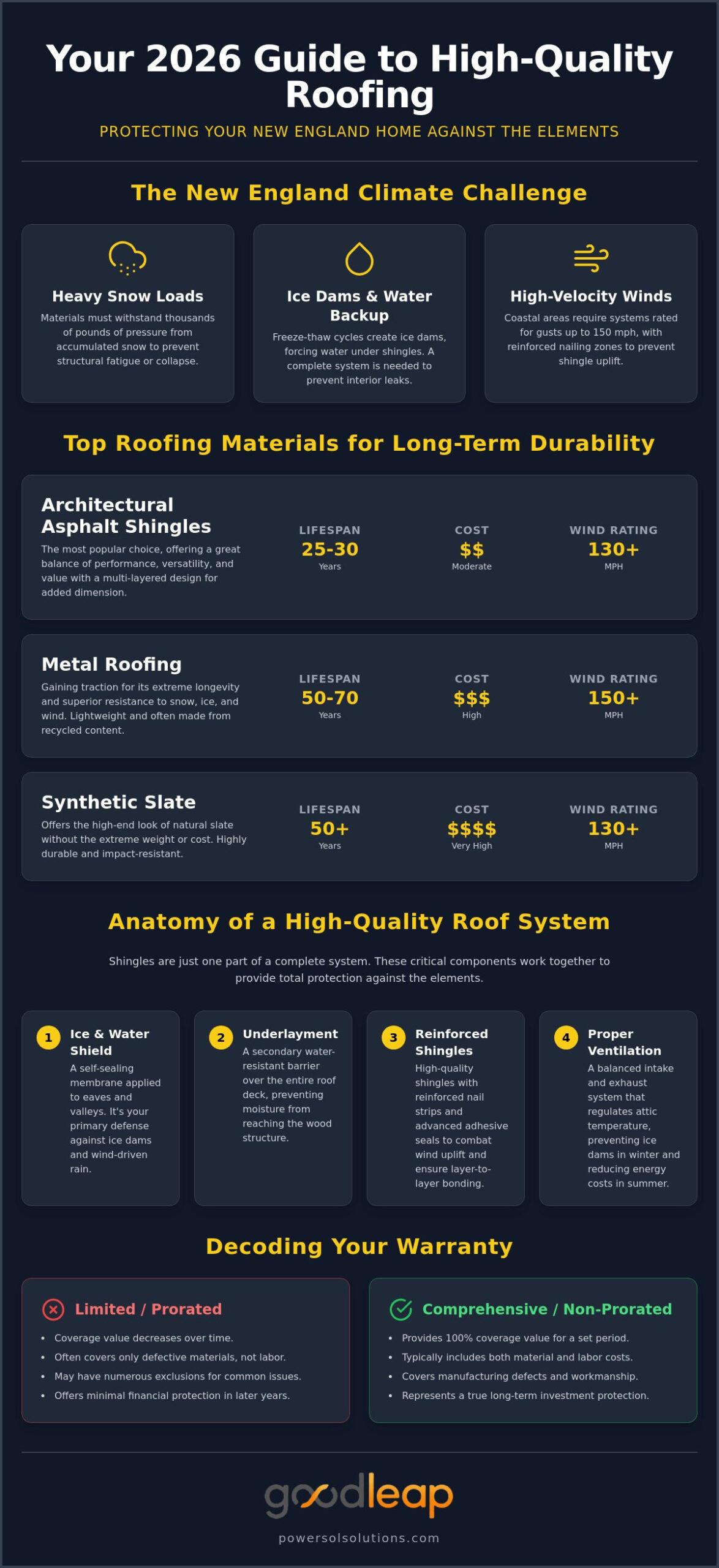
Massachusetts weather is notoriously demanding. In 2026, homeowners face a landscape of shifting weather patterns that require more than just a standard shingle. Selecting commercially available roofing materials isn’t about aesthetics; it’s about structural integrity. Heavy snow loads can exert thousands of pounds of pressure on your home’s frame. If you choose the wrong material, you risk structural fatigue or even collapse during a severe winter. A roof is your home’s first line of defense.
High quality roofing materials must account for the dramatic thermal expansion and contraction cycles common from the Berkshires to the Cape. As temperatures swing from sub-zero nights to sunny afternoons, materials expand and contract. Lower-grade products become brittle and crack under this stress. Premium options maintain their flexibility, ensuring your home remains watertight through every season. This durability is what separates a 15-year roof from a 30-year investment.
The Threat of Ice Dams and Temperature Fluctuations
Winter in towns like Brockton and Bridgewater brings a specific set of risks. When heat escapes from your attic, it melts snow on the roof, which then refreezes at the cold eaves. This creates an ice dam that forces water upward under your shingles. Under 2026 building standards, you need high-performance membranes with superior elasticity. These systems create a self-sealing barrier around every nail, preventing winter water backup from reaching your interior walls. Modern 780 CMR codes now require these ice and water shields to extend at least 24 inches inside the interior warm wall line to ensure total protection.
Wind Resistance Standards for Coastal Massachusetts
Coastal communities like Quincy and Boston require a different level of protection. Salt air and high-velocity winds can strip away standard shingles in a single storm. We look for high quality roofing materials with reinforced nail zones and high-wind ratings, such as ASTM D7158 Class H. This classification ensures your roof can withstand gusts up to 150 mph. Protecting your home means looking for specific features that handle the North Atlantic’s power:
- Reinforced nail strips: These provide a double-bond area for maximum grip against wind uplift.
- Advanced adhesive seals: Premium shingles use proprietary sealants that lock each layer together during the installation process.
- Code-compliant underlayment: Massachusetts law requires specific underlayment layers based on your roof’s slope to prevent moisture infiltration.
- Positive drainage design: Your system must be engineered to drain completely within 48 hours of a rainfall to prevent standing water issues.
Choosing the right materials is the only way to ensure your home stays dry and secure. By focusing on these technical standards, you’re not just fixing a roof; you’re building a legacy of safety for your family.
Top 5 Roofing Materials for Long-Term Durability in 2026
Choosing the right material for a New England home requires a balance between architectural beauty and structural resilience. In 2026, over half of Massachusetts homeowners continue to favor asphalt shingles for their versatility, yet alternative materials like metal and synthetic slate are gaining traction for their extreme longevity. Investing in high quality roofing materials ensures that your home remains protected while maximizing your property’s resale value. Whether you own a historic Victorian in Quincy or a modern colonial in Brockton, your choice of material defines your home’s defense for the next thirty years.
Modern manufacturing has prioritized sustainability, with many 2026 options featuring high percentages of recycled content. For a detailed breakdown of costs and longevity, you can consult this Homeowner’s Guide to the Types of Roofing Materials to see how different options compare. Selecting a material that matches your home’s structural capacity is vital, as heavier options like natural slate may require additional reinforcement.
Architectural Asphalt Shingles: Performance and Value
Multi-layered architectural shingles remain the industry standard for a reason. They provide a dimensional look that mimics natural wood shakes while offering superior protection against the elements. These are not your standard shingles; they represent advanced durable roofing solutions designed to resist algae growth and granule loss. In 2026, premium shingles feature enhanced algae-resistance warranties that last up to 25 years, keeping your roof looking pristine even in humid coastal air. Their heavy-duty construction provides a reliable barrier against wind-driven rain and snow.
Metal Roofing: The Permanent Solution
Standing seam metal roofing is rapidly becoming a favorite for homeowners seeking a “one-and-done” investment. It excels at shedding heavy snow, which prevents the dangerous weight accumulation that often leads to structural stress. Metal is also highly energy-efficient, reflecting solar heat to keep your cooling costs lower during humid Massachusetts summers. Because metal roofs often last 50 years or more, they are a perfect companion for a comprehensive siding upgrade, creating a cohesive and maintenance-free exterior for your home.
Synthetic and Composite Slate Alternatives
If you love the look of natural slate but worry about the weight and cost, synthetic alternatives offer a brilliant compromise. These composite materials are engineered from recycled rubbers and plastics to provide incredible impact resistance. They easily withstand falling branches and hail, earning high ratings for durability. Unlike natural slate, which can be brittle, synthetic options are flexible and easier to install. They offer the same historic aesthetic without the need for expensive structural modifications to your rafters.
Rounding out the top five choices are natural slate and wood shingles. Natural slate remains the gold standard for luxury and can last over a century, while wood shingles provide a classic coastal charm that ages beautifully into a silver-gray patina. Each of these high quality roofing materials offers a unique set of benefits tailored to the specific needs of your Massachusetts property.
Beyond Shingles: The Critical Components of a High-Quality Roof System
While shingles provide the aesthetic appeal and primary shedding surface, they only represent about 30% of your roof’s total protective capability. A truly durable installation relies on a network of high-quality accessories working in unison to defend your home. When you invest in a complete roof replacement in Massachusetts, you’re not just buying a new exterior layer; you’re commissioning a fully integrated weatherproofing system. This systemic approach is supported by the National Roofing Contractors Association guide to roofing materials, which emphasizes that the interaction between different components determines the lifespan of the entire structure.
Ice and Water Shields: The Hidden Protector
In towns like Holbrook and Stoughton, where winter storms can be brutal, dual-layer ice and water shields are non-negotiable. These self-healing rubberized membranes are strategically applied to eaves, valleys, and around chimneys. If a nail penetrates the membrane or if a small puncture occurs during a storm, the specialized 2026 rubberized compounds “creep” back around the fastener to maintain a watertight seal. This layer prevents ice dams from forcing water into your home’s structural framing, ensuring your interior remains dry even during the worst Nor’easters.
Synthetic Underlayment vs. Traditional Felt
The shift from traditional organic felt to synthetic underlayment has revolutionized roof durability. Synthetic options offer vastly superior tear strength and moisture resistance, ensuring the roof deck remains dry even if shingles are damaged. High-quality underlayment is essential for preventing the common signs of a leaking roof, such as water staining on attic rafters or decking rot. These high quality roofing materials are also breathable, allowing trapped moisture to escape the wood deck while keeping external water out. This prevents the wood from warping or rotting over time.
Advanced Ventilation and Ridge Vents
A roof’s longevity is directly tied to the temperature of the attic beneath it. Without proper air circulation, summer heat can bake shingles from the inside out, causing them to curl and fail prematurely. Modern 2026 ventilation designs utilize a balanced intake and exhaust system. Continuous ridge vents at the peak work with soffit vents at the eaves to create a constant flow of fresh air. This healthy roofing ecosystem regulates temperatures and prevents the moisture buildup that leads to mold. By selecting high quality roofing materials for every layer of the system, you ensure that your investment remains secure for decades to come.
Evaluating Material Quality: Warranties, Ratings, and ROI
Deciphering a roofing specification sheet is the first step toward a secure investment. You need to look beyond the brand name and focus on the technical performance data that dictates how your roof will age. In 2026, the term “Lifetime” is often used as a marketing catch-all, but the real value lies in non-prorated coverage. This specific type of warranty ensures that the manufacturer pays the full cost of replacement, including labor and disposal, for a set period rather than reducing the payout as the roof gets older. When evaluating high quality roofing materials, you must consider the 30-year cost of ownership. A higher initial investment in premium shingles or metal often results in a much lower cost per year because you avoid minor repairs and extend the time between replacements.
The return on investment for a high-performance roof extends beyond simple durability. It also impacts your home’s energy efficiency and insurance costs. By selecting materials with proven performance ratings, you’re building a profile of technical competence for your property. This level of technical detail is why working with qualified roofing contractors in Boston, MA is essential for navigating local building codes and environmental demands. Homeowners who also partner with trusted vinyl siding contractors in Boston can further strengthen their home’s thermal envelope and weather resistance by ensuring the roof and exterior wall systems work together seamlessly.
Understanding UL and ASTM Performance Ratings
Performance ratings from UL and ASTM provide an objective measure of protection for your household. A Class A fire rating is the highest standard available, often leading to reduced home insurance premiums in Massachusetts. While hail is less frequent than snow in our region, a Class 4 impact resistance rating protects your home against falling debris and heavy branches during coastal storms. For homeowners in the Greater Boston area, wind speed ratings are critical. Moving from a standard 110 mph rating to a 130 mph rating provides a significant safety margin during high-wind events, ensuring your shingles stay attached when the weather turns severe.
Manufacturer Certifications and Workmanship
Manufacturer certifications are the final piece of the quality puzzle. Even the best high quality roofing materials will fail if they are stored improperly or installed by uncertified crews. Most top-tier manufacturers only offer their most comprehensive 50-year non-prorated warranties when the installation is performed by a credentialed contractor who has undergone specialized training. This ensures the material is handled with precision from the moment it arrives on your property. If you are planning an asphalt shingle replacement, verify that your installer follows the exact manufacturer specifications for nailing patterns and starter strips. This meticulous attention to detail protects your warranty and your home’s long-term integrity.
Protect your investment with a system designed for longevity and peace of mind. Connect with our specialists to review your roofing specifications today.
Selecting the Right Roofing Solution for Your Home
Choosing the right roof isn’t just about picking a color from a catalog. It’s about matching the specific structural needs of your home with the aesthetic standards of your neighborhood. A professional local inspection is the only way to determine if your existing decking can support heavier high quality roofing materials or if structural repairs are needed first. This step ensures that your 30-year investment sits on a foundation that’s just as durable as the shingles themselves. Preparing your property for installation involves more than clearing the driveway; it requires a deep understanding of how new materials will interact with your home’s unique architecture.
Customizing Protection for Randolph and Quincy Homes
In Randolph and Quincy, local environmental factors play a massive role in material selection. Homes tucked under heavy tree canopies face constant moisture and organic debris, making algae-resistant granules a top priority. Coastal properties in Quincy deal with corrosive salt air and higher wind speeds, requiring specific fastening patterns and corrosion-resistant flashing. Even the color of your material matters. Lighter shades can improve energy efficiency by reflecting solar heat, which keeps your attic cooler and reduces the strain on your HVAC system during humid Massachusetts summers. Finalizing your material list means addressing these neighborhood-specific challenges to build a truly durable exterior.
The Powersol Commitment to Quality
At Powersol Solutions, we act as your meticulous protector throughout the entire renovation journey. We don’t just order supplies; we verify every shipment of high quality roofing materials to ensure they meet our strict standards for precision and craftsmanship. Our team coordinates every detail, from the safe delivery of materials to the final site cleanup. Because we also specialize in siding and windows, we can ensure that your new roof integrates perfectly with your home’s entire exterior envelope. This holistic approach prevents common failure points where different systems meet, such as the flashing between a roof line and new siding. For homeowners considering a complete exterior upgrade, working with experienced vinyl siding contractors in Boston alongside your roofing project ensures a unified, maintenance-free exterior that maximizes both protection and energy efficiency. If you’re also weighing your siding options, our detailed guide on vinyl vs fiber cement siding MA can help you choose the material that best withstands the Commonwealth’s demanding freeze-thaw cycles and coastal salt air.
Taking the next step toward a secure home is a logical progression. We provide a clear, methodical path from your initial inquiry to a completed installation. By focusing on the future value and efficiency of your property, we help you make a choice that brings lasting pride of ownership. Reach out today to discuss your project requirements and receive a customized material and installation quote tailored to your home’s unique needs.
Secure Your Home’s Future with a Durable Roofing System
Your roof is the most important shield your home has against the harsh New England elements. By understanding the synergy between components like ice shields and ridge vents, you’ve taken the first step toward a smarter investment. Choosing high quality roofing materials specifically rated for Massachusetts wind and snow loads ensures that your property remains a safe haven for decades. Whether you opt for the versatility of architectural shingles or the permanence of metal, the quality of your installation remains the defining factor in your home’s long-term integrity.
Powersol Solutions brings over 10 years of Massachusetts roofing expertise to every project. As certified installers for premium material brands, we ensure your warranty remains valid through precise craftsmanship and obsessive attention to detail. We provide comprehensive exterior solutions, including siding and windows, to create a unified defense for your household. Protect your home with a free roofing consultation from Powersol Solutions. Partnering with a seasoned expert ensures your investment is handled with the professional care it deserves. We look forward to helping you build a legacy of safety and efficiency for your home.
Frequently Asked Questions
What are the best roofing materials for heavy snow in Massachusetts?
Metal roofing and premium architectural shingles are the top choices for managing heavy snow in Massachusetts. Metal roofs excel because their smooth surface allows snow to slide off safely, preventing dangerous weight accumulation on your rafters. If you prefer shingles, selecting high quality roofing materials with steep-slope designs and integrated ice shields will prevent the water backup associated with winter ice dams.
How long do high-quality asphalt shingles actually last in New England?
High-quality asphalt shingles typically last between 25 and 30 years in the New England climate when installed as part of a complete system. While standard shingles might fail sooner due to rapid temperature swings, premium architectural options are engineered with heavier mats and better granule adhesion. Proper attic ventilation is the most critical factor in reaching this 30-year lifespan in our region.
Is metal roofing worth the extra cost for a home in Boston?
Metal roofing is a wise investment for Boston homeowners who plan to stay in their property for more than 20 years. While the initial cost is higher than asphalt, its 50-year lifespan and superior resistance to coastal winds provide a better long-term value. It also eliminates the need for frequent repairs or snow removal after heavy winter storms, saving you money on maintenance.
Does high-quality roofing material improve home energy efficiency?
Yes, modern high quality roofing materials significantly improve energy efficiency by reflecting solar heat away from your attic. “Cool roof” technology uses specialized granules to reduce the amount of heat absorbed by your home during humid Massachusetts summers. This reduction in attic temperature lowers your cooling costs and extends the life of your HVAC system by reducing its daily workload.
What is the difference between architectural and 3-tab shingles?
Architectural shingles are multi-layered and heavier, whereas 3-tab shingles consist of a single, flat layer. Architectural shingles provide a dimensional look and are rated for much higher wind speeds, often up to 130 mph or more. Because they are thicker and more durable, they offer a significantly better warranty and longer lifespan than traditional 3-tab options, which are increasingly rare in 2026.
Can I install new high-quality shingles over my old roof?
While Massachusetts building code (780 CMR) allows for a maximum of two shingle layers, we always recommend a full tear-off for a high-quality installation. Stripping the old roof allows us to inspect the underlying wood deck for rot and install required ice and water shields directly to the wood. This ensures your new system meets all 2026 safety standards and qualifies for the best manufacturer warranties.
Do premium roofing materials increase my home’s resale value?
Installing premium roofing materials provides a high return on investment and can significantly increase your home’s resale value. Potential buyers in Massachusetts prioritize a roof that can handle the winter, and a transferable, non-prorated warranty offers them immense peace of mind. A new, high-performance roof often makes a home sell faster by removing a major future expense for the buyer during the negotiation.
What should I look for in a roofing material warranty in 2026?
In 2026, you should prioritize non-prorated warranties that cover both material defects and labor costs for at least the first 20 to 50 years. Look for “system warranties” that apply when you use a single manufacturer for shingles, underlayment, and ventilation components. Ensure the warranty includes specific protection against wind uplift and algae growth to cover the unique environmental risks of the New England climate.